










Close
MCE 2026
World Hydrogen & Carbon Americas

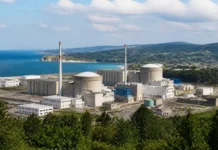
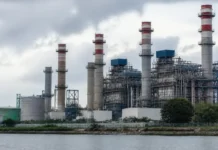
Chiba CCGT Power Plant, Japan

Note* - All images used are for editorial and illustrative purposes only and may not originate from the original news provider or associated company.

Subscribe

- Never miss a story with notifications

- Gain full access to our premium content

- Browse free from any location or device.

Media Packs

Expand Your Reach With Our Customized Solutions Empowering Your Campaigns To Maximize Your Reach & Drive Real Results!

– Access the Media Pack Now

– Book a Conference Call

Leave Message for Us to Get Back

Related stories

Financing Models Driving Hydrogen and Carbon Power Projects

The massive scale of the energy transition requires innovative financial structures that can bridge the gap between technological potential and industrial reality. By examining the evolution of project finance, the role of public-private partnerships, and the rise of sustainable investment criteria, we can understand the mechanisms that are de-risking and accelerating the deployment of next-generation hydrogen and carbon capture infrastructure.

Carbon Pricing and Its Long-Term Impact on Power Generation Economics

The implementation of robust carbon pricing mechanisms is fundamentally altering the financial landscape of the energy sector. By internalizing the environmental costs of emissions, these policies are shifting the competitive advantage from fossil fuels to low-carbon alternatives, reshaping investment strategies, and redefining the long-term economic viability of power generation technologies globally.

Regional Power Markets Preparing for Hydrogen Integration

The global energy transition is moving beyond national borders as interconnected power markets prepare for the widespread integration of molecular energy carriers. This analysis explores the regulatory shifts, market redesigns, and infrastructure coordination required to harmonize the role of hydrogen within regional electricity grids, ensuring a stable and cost-effective path to decarbonisation.
- Advertisement -
The $1.5 billion Chiba CCGT project is now providing 2,800MW from turbines supplied by GE and Mitsubishi Heavy Industries. The project mirrored the same priorities as the earlier Yokohama combined-cycle plant. Like the Yokohama investment, Chiba involved two power trains in a high efficiency plant. Each power train was again made up of four 360MW stages containing one gas and one steam turbine each.

The plant was built next to an existing 475MW oil-fired plant built in the 1950s. Orders for unit one were placed in 1995. The fourth stage of the No. 2 power station was completed in June 2000.

The Chiba plant will be the third advanced combined-cycle facility to be built by GE for TEPCO. The others are the 2,000MW Futtsu station on Tokyo Bay and the 2,800MW advanced combined-cycle plant at Yokohama which, like Chiba, has GE’s 109FA combined-cycle technology. The Chiba order came a few days after a US trade mission arrived in Tokyo to seek enhanced opportunities in Japan’s $25 billion power equipment market.

CHIBA PLANT MAKE-UP

The Chiba order was split between Mitsubishi Heavy Industries and GE. Mitsubishi supplied unit one, using its 701F heavy-duty gas turbines. GE-supplied power plant for Chiba unit two comprised four STAG™ (steam and gas) 109FA combined-cycle units, each including an MS9001FA gas turbine, a steam turbine and a generator. The gas turbines were built at GE’s Greenville, SC, facility and the steam turbines and generators were built in Schenectady.

The value of the order to GE was $500 million. Subcontractors on unit two included GE turbine allies Toshiba and Hitachi and combustion equipment groups IHI and Foster Wheeler. Construction equipment and materials were procured and assembled overseas. Payment for overseas procurement came to roughly €814 million.

POWER COMBUSTION EFFICIENCY

Each unit at the GE plant is made up of four 360MW power trains. The stages consist of one gas turbine of 230MW, a single reheat steam turbine of 130MW and a 3,000rpm hydrogen cooled generator arranged on a single shaft.

GE’s heavy-duty 109FA gas turbine design was selected for the project, as it was for the earlier Yokohama project. Combustion temperature has been increased from 1,000°C using traditional CCGT to 1,300°C using new thermal technology. The improved combined-cycle system has a power-generating efficiency of 49%.

Clean LNG is used to reduce the SOx and dust emissions. In additional, carbon dioxide and nitrogen-oxide (NOx) emissions are relatively low. The NOx emissions are controlled by an improved design of combustion chamber and with a de-NOx device (a selective catalytic reduction system). Construction methods were also improved to cut costs and reduce completion time. The main equipment was assembled off-site and materials procurement procedures were streamlined to reduce late deliveries.

JAPANESE POWER MARKET

Japan’s ten vertically integrated general electric utilities, which enjoy regional monopolies, are under intense pressure from the government and the private sector to lower electricity rates. These were at the time of building the plant some 20% higher than other industrialised nations. Japanese demand for electricity is only expected to grow at 2.1% per annum, and international pressure on Japan to reduce greenhouse gas emissions prompted the authorities to promote energy saving and an alternative lower target (1.2%) for power consumption. However, the new competitive situation in the power generation industry is providing potential new market opportunities.

The Tokyo Electric Power Company (TEPCO) is the world’s largest private power company. It supplies electricity to 25 million customers in Tokyo, Yokohama and the Kanto region. TEPCO has a generating capacity of around 57,000MW, produced by fossil fuel (56%), nuclear (30%) and hydroelectric (14%) power. The company holds stakes in power plants in China, India and Southeast Asia as well as having interests in electrical engineering telecommunications.

Latest stories

Related stories

Financing Models Driving Hydrogen and Carbon Power Projects

The massive scale of the energy transition requires innovative financial structures that can bridge the gap between technological potential and industrial reality. By examining the evolution of project finance, the role of public-private partnerships, and the rise of sustainable investment criteria, we can understand the mechanisms that are de-risking and accelerating the deployment of next-generation hydrogen and carbon capture infrastructure.

Carbon Pricing and Its Long-Term Impact on Power Generation Economics

The implementation of robust carbon pricing mechanisms is fundamentally altering the financial landscape of the energy sector. By internalizing the environmental costs of emissions, these policies are shifting the competitive advantage from fossil fuels to low-carbon alternatives, reshaping investment strategies, and redefining the long-term economic viability of power generation technologies globally.

Regional Power Markets Preparing for Hydrogen Integration

The global energy transition is moving beyond national borders as interconnected power markets prepare for the widespread integration of molecular energy carriers. This analysis explores the regulatory shifts, market redesigns, and infrastructure coordination required to harmonize the role of hydrogen within regional electricity grids, ensuring a stable and cost-effective path to decarbonisation.

Repurposing Legacy Power Infrastructure for Low-Carbon Energy Networks

The transition to a sustainable energy future does not require the wholesale destruction of existing systems. By creatively repurposing legacy power infrastructure for low-carbon energy networks, nations can accelerate the deployment of hydrogen and carbon capture technologies while significantly reducing the capital expenditure and environmental impact associated with building entirely new transmission and storage systems.

Subscribe

- Never miss a story with notifications

- Gain full access to our premium content

- Browse free from any location or device.

Media Packs

Expand Your Reach With Our Customized Solutions Empowering Your Campaigns To Maximize Your Reach & Drive Real Results!

– Access the Media Pack Now

– Book a Conference Call

Leave Message for Us to Get Back

Translate »