
























Close
MCE 2026
World Hydrogen & Carbon Americas

EPRI Joins International Consortium to Overcome Barriers to Renewable Energy Integration

Note* - All images used are for editorial and illustrative purposes only and may not originate from the original news provider or associated company.

Subscribe

- Never miss a story with notifications

- Gain full access to our premium content

- Browse free from any location or device.

Media Packs

Expand Your Reach With Our Customized Solutions Empowering Your Campaigns To Maximize Your Reach & Drive Real Results!

– Access the Media Pack Now

– Book a Conference Call

Leave Message for Us to Get Back

Related stories

Transformation of Power Distribution through Advanced Metering Infrastructure

The distribution level of the energy value chain is undergoing a fundamental redesign as utilities replace legacy equipment with intelligent monitoring systems that optimize flow and efficiency.

Strengthening Grid Reliability Through Advanced Metering Infrastructure

Grid stability and uptime are becoming increasingly critical as extreme weather events and fluctuating demand patterns challenge the resilience of traditional power systems.

The Role of Advanced Metering Infrastructure in Driving Smart Grid Growth

Modern energy systems are undergoing a radical transformation as digital communication layers integrate with traditional power hardware to facilitate a more responsive and scalable grid architecture.
- Advertisement -

The Electric Power Research Institute (EPRI) recently joined a major international project, the Global Power System Transformation Consortium (G-PST), to help remove technical hurdles to renewable energy integration. As a core G-PST technical team member, the EPRI will work closely with several energy research organizations, a U.S. Department of Energy (DOE) national laboratory, and more than 25 power system operators from around the world to address this growing challenge.

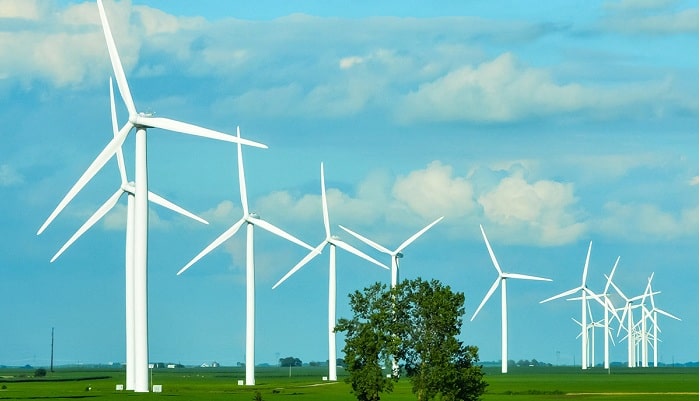
The increasing mix of renewables across global power systems requires more flexible operation than in the past. In the United States alone, renewables are expected to grow from 19% of U.S. electricity generation in 2019 to 38% by 2050 — increasing the variability facing power system operators.

The need to confront this challenge prompted the launch of the G-PST, aimed at accelerating the transition to a cleaner grid safely, reliably, and affordably. The EPRI joined G-PST to help grow the consortium, identify technology solutions, and coordinate with global stakeholders.

“Harnessing the insights of global energy leaders to better integrate renewables is a game changer for power system operators, customers, and the environment,” said EPRI Vice President of Innovation Mark McGranaghan, who will lead the institute’s G-PST engagement. “The EPRI’s longstanding, collaborative research with energy providers and grid operators around the world will be instrumental to accelerating the transition to a cleaner energy system.”

While supporting clean energy resource integration, the G-PST’s focus includes helping reduce emissions of all global pollutants by 50% or more during the next 10 years.

The consortium is led by CEOs of six of the world’s leading system operators: Australian Energy Market Operator (AEMO), National Grid ESO (United Kingdom), California Independent System Operator (CAISO), Electric Reliability Council of Texas (ERCOT), EirGrid (Ireland), and Energinet (Denmark).

In addition to the EPRI, the core technical team includes Energy Systems Integration Group (ESIG), Imperial College London, Council of Scientific and Industrial Research (CSIR), Fraunhofer Cluster of Excellence Integrated Energy Systems (CINES), National Renewable Energy Laboratory (NREL), Latin American Energy Organization (OLADE), Institute of Electrical and Electronics Engineers (IEEE), Commonwealth Scientific and Industrial Research Organisation (CSIRO), the Technical University of Denmark (DTU), and ASEAN Center for Energy (ACE).

Latest stories

Related stories

Transformation of Power Distribution through Advanced Metering Infrastructure

The distribution level of the energy value chain is undergoing a fundamental redesign as utilities replace legacy equipment with intelligent monitoring systems that optimize flow and efficiency.

Strengthening Grid Reliability Through Advanced Metering Infrastructure

Grid stability and uptime are becoming increasingly critical as extreme weather events and fluctuating demand patterns challenge the resilience of traditional power systems.

The Role of Advanced Metering Infrastructure in Driving Smart Grid Growth

Modern energy systems are undergoing a radical transformation as digital communication layers integrate with traditional power hardware to facilitate a more responsive and scalable grid architecture.

Advanced Metering Infrastructure Powering Data Driven Utilities

The transition from analog management to digital intelligence is redefining the utility sector as data becomes the primary driver for operational excellence and strategic decision-making.

Subscribe

- Never miss a story with notifications

- Gain full access to our premium content

- Browse free from any location or device.

Media Packs

Expand Your Reach With Our Customized Solutions Empowering Your Campaigns To Maximize Your Reach & Drive Real Results!

– Access the Media Pack Now

– Book a Conference Call

Leave Message for Us to Get Back

Translate »